Soft-close and push-to-open: what they do and when to choose them
Soft-close stops doors and drawers slamming; push-to-open lets you have fronts with no handles. How each works, where each makes sense, and when to choose something else.
These are two small mechanisms that change how a wardrobe feels every day. They are often confused, and they do opposite jobs.
Soft-close
A soft-close mechanism slows a door or drawer for the last few centimetres and closes it quietly.
On hinged doors
Soft-close hinges have a damper built in. Push the door and let go: it slows down and closes gently.
On drawers
Soft-close runners pull the drawer shut for the last stretch and stop it banging. Each drawer has its own pair of runners, so the cost is per drawer.
On sliding doors
A sliding door can have a damper at each end of its travel, so it slows down before it meets the side of the wardrobe or the other door.
Is it worth it?
For most bedrooms, yes:
- quieter when someone is asleep,
- less wear on the fronts and the body,
- doors and drawers close fully, even when pushed lazily.
Push-to-open
Push-to-open is a small latch behind a door or drawer. Press the front and it springs open a little, so you can take hold of the edge. It lets you have a front with no handle at all.
When it makes sense
- A modern, flat look where handles would spoil the line.
- Wardrobes used by adults who know where to press.
- Fronts that are not opened dozens of times a day.
When it does not
- Children's rooms. Small hands lean on doors, and the doors pop open.
- Homes with pets. A dog brushing past can open a drawer.
- Tight spaces where you might lean against the wardrobe.
- Very tall doors, which can feel less positive to open from a push.
In these cases a slim recessed grip or a small knob is often the better choice.
Can you have both?
Push-to-open and soft-close pull in different directions on the same front: one wants the door to spring open, the other wants to slow it shut. We fit push-to-open on handleless fronts and offer soft-close on fronts with handles, and we will talk you through the combination for your design.
Trying the options
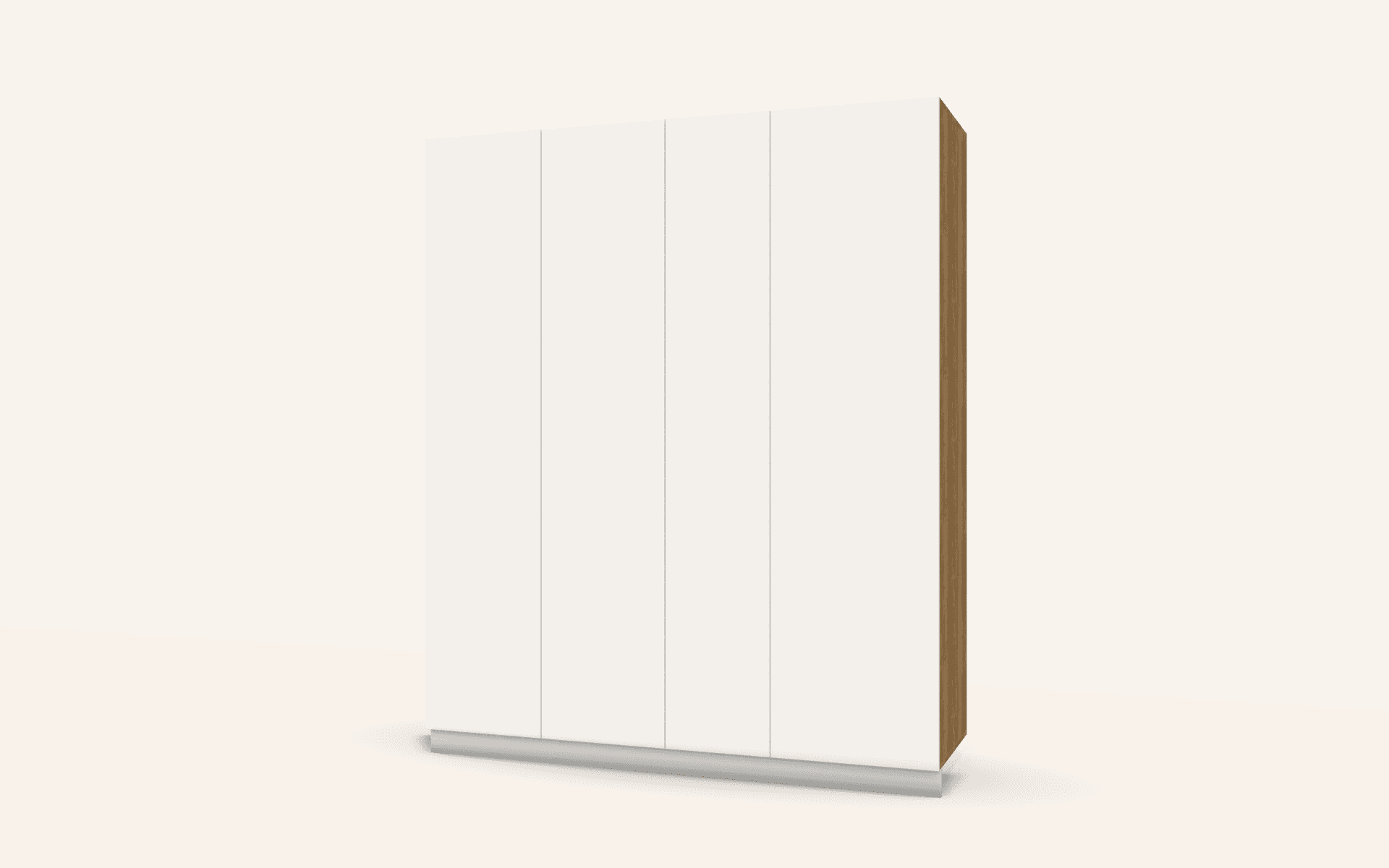
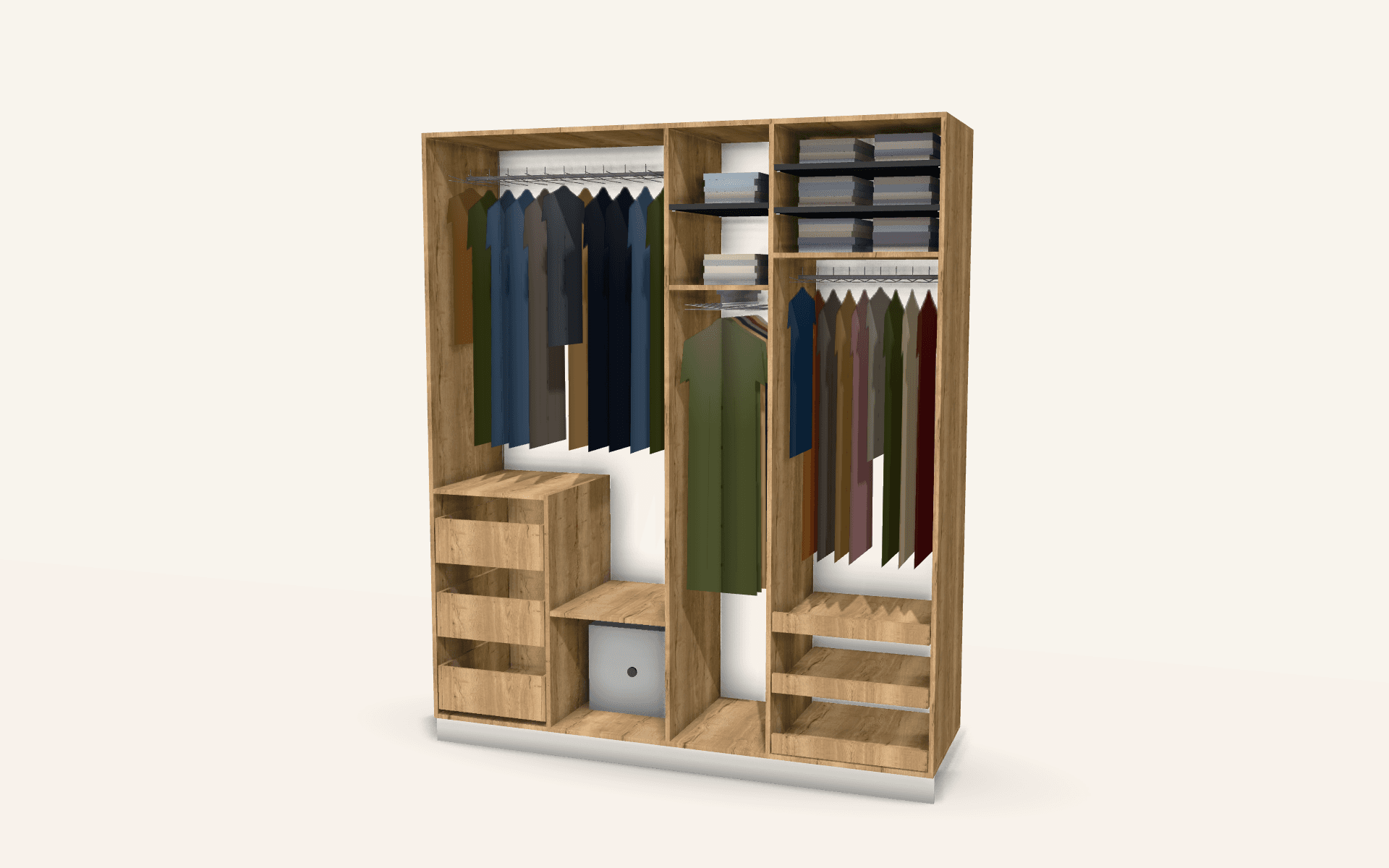
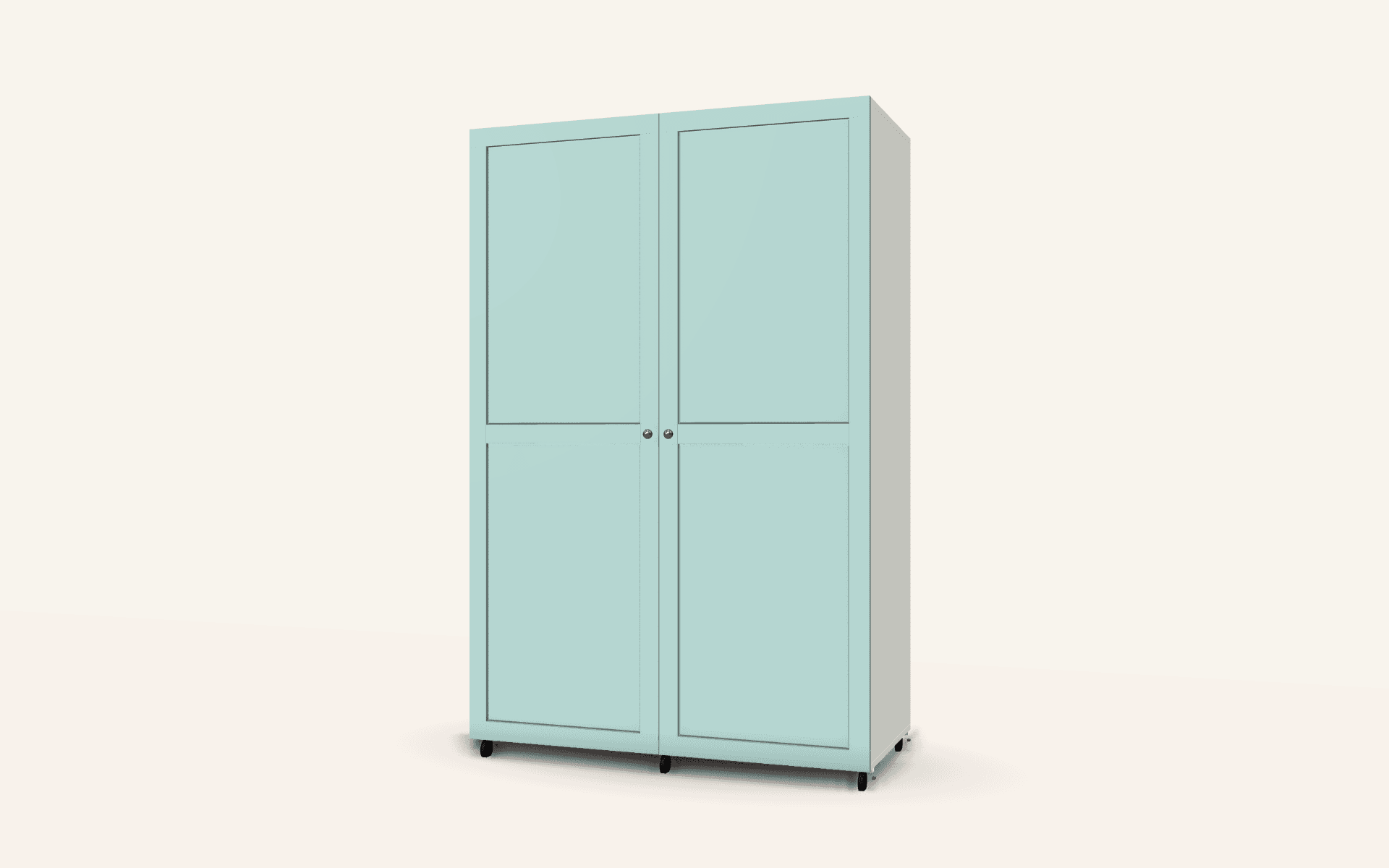
The Holborn handleless design uses push-to-open fronts. The Linden kids' room uses knobs instead, for the reasons above. Our hardware guide covers hinges, runners and drawer boxes in more detail.
Frequently asked
- Does soft-close cost much more?
- It adds a little per hinge or drawer. The configurator shows the difference for your design.
- Is push-to-open suitable for a child’s room?
- Usually not. Children lean on fronts and open them by accident, so a knob or a grip is safer.
- Can drawers be push-to-open?
- Yes, with a latch fitted behind each drawer.
- Can sliding doors be soft-close?
- Yes, with a damper that slows the door at the end of its travel.