Wardrobe materials and finishes explained
Melamine-faced boards, painted fronts, glass and mirror: what each material is, where it works best, and how to combine a body decor, a front decor and a contrast colour.
Choosing a finish is the enjoyable part, but it helps to know what each material actually is and how it wears.
Melamine-faced boards
Most fitted wardrobes are built from melamine-faced chipboard: a stable board with a hard-wearing decorative surface pressed onto it. The edges are finished with a matching edging strip.
- Woodgrain decors look like oak, walnut or ash, with a textured surface you can feel. They hide fingerprints and small marks well.
- Plain colours range from white and cream to greys, greens and near-black.
Melamine is tough, easy to wipe and good value. It is our default for the body of a wardrobe and for many fronts.
Painted fronts
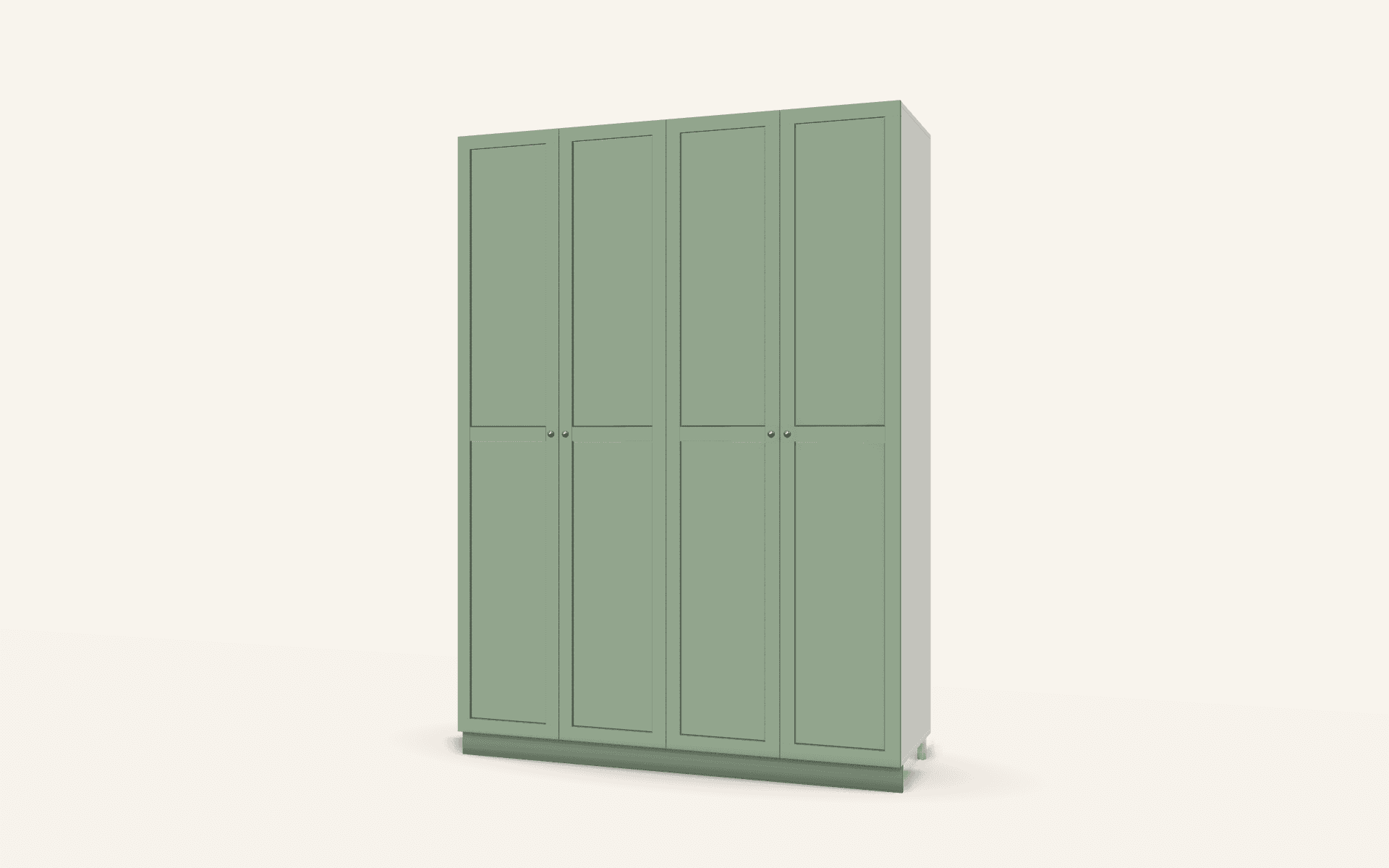
For a shaker look, or for a colour you cannot find in a decor range, we use painted MDF fronts. They can be painted in almost any colour you bring us a reference for.
- Painted fronts suit traditional houses and children's rooms.
- They need a little more care than melamine: wipe, do not scrub.
- Usually only the fronts are painted. The body stays in a matching board.
The Ashdown painted shaker shows a painted front.
Glass
Glass panels can be fitted in hinged doors or as panels in sliding doors.
- Clear glass shows what is inside, so it suits display shelves more than a full wardrobe.
- Satin (frosted) glass lets light through but hides the contents. It softens a large sliding front.
Mirror
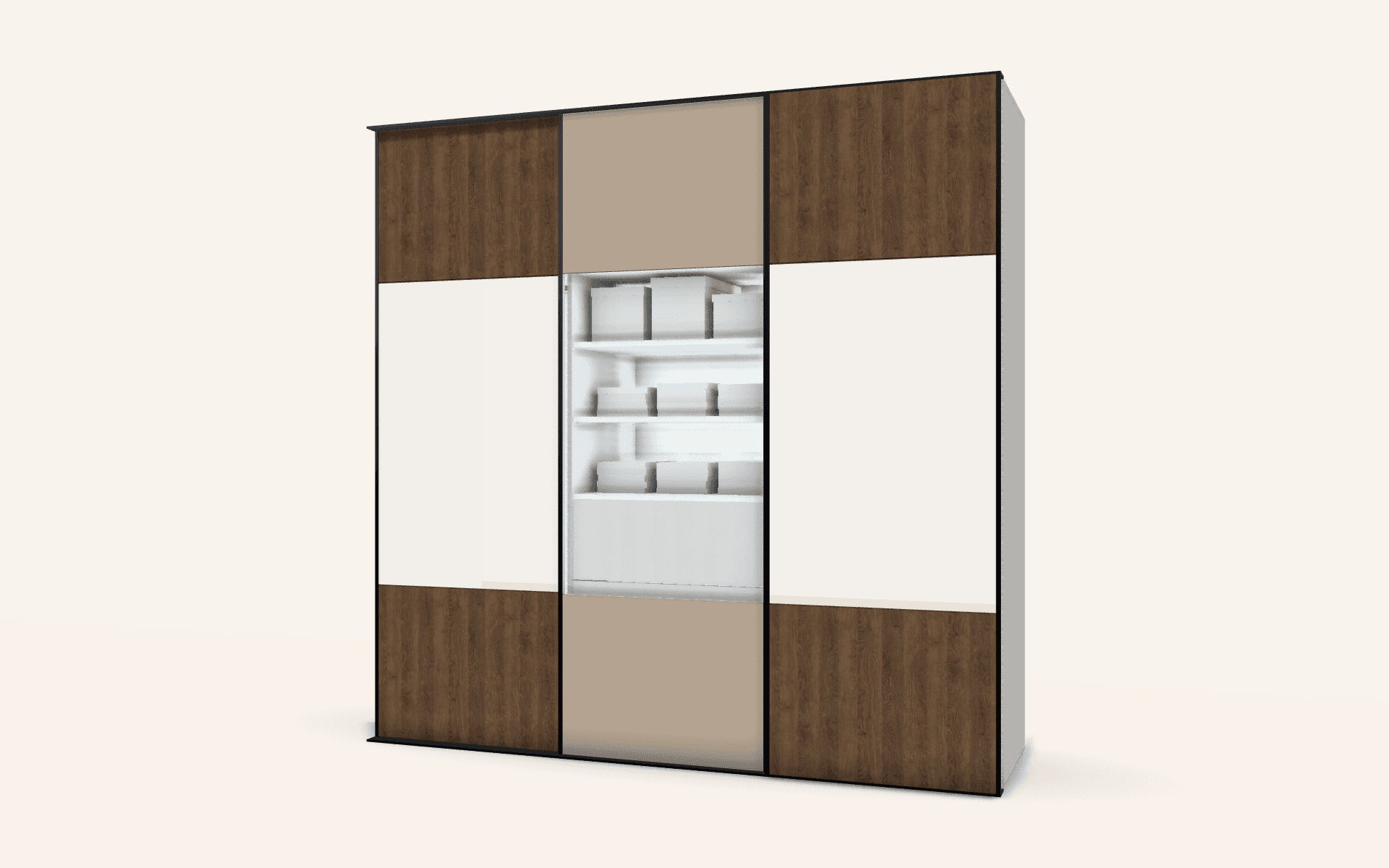
A mirror panel on a door or a sliding leaf makes a room feel larger and saves wall space. Every mirror is fitted on a backing board, so the door is as solid as any other. The Richmond with mirror panels combines woodgrain, mirror and satin glass.
Body, fronts and a contrast colour
You choose finishes in slots:
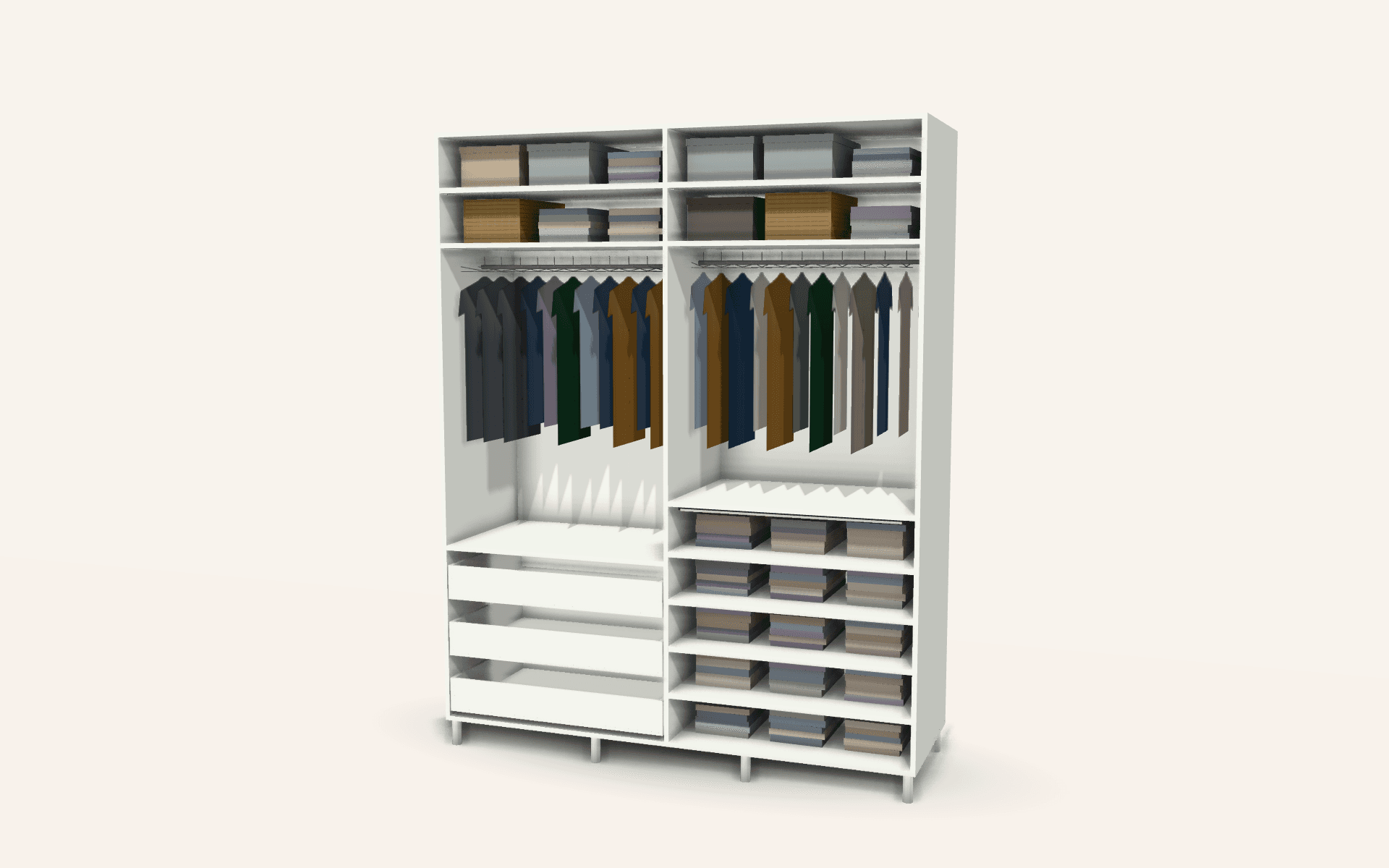
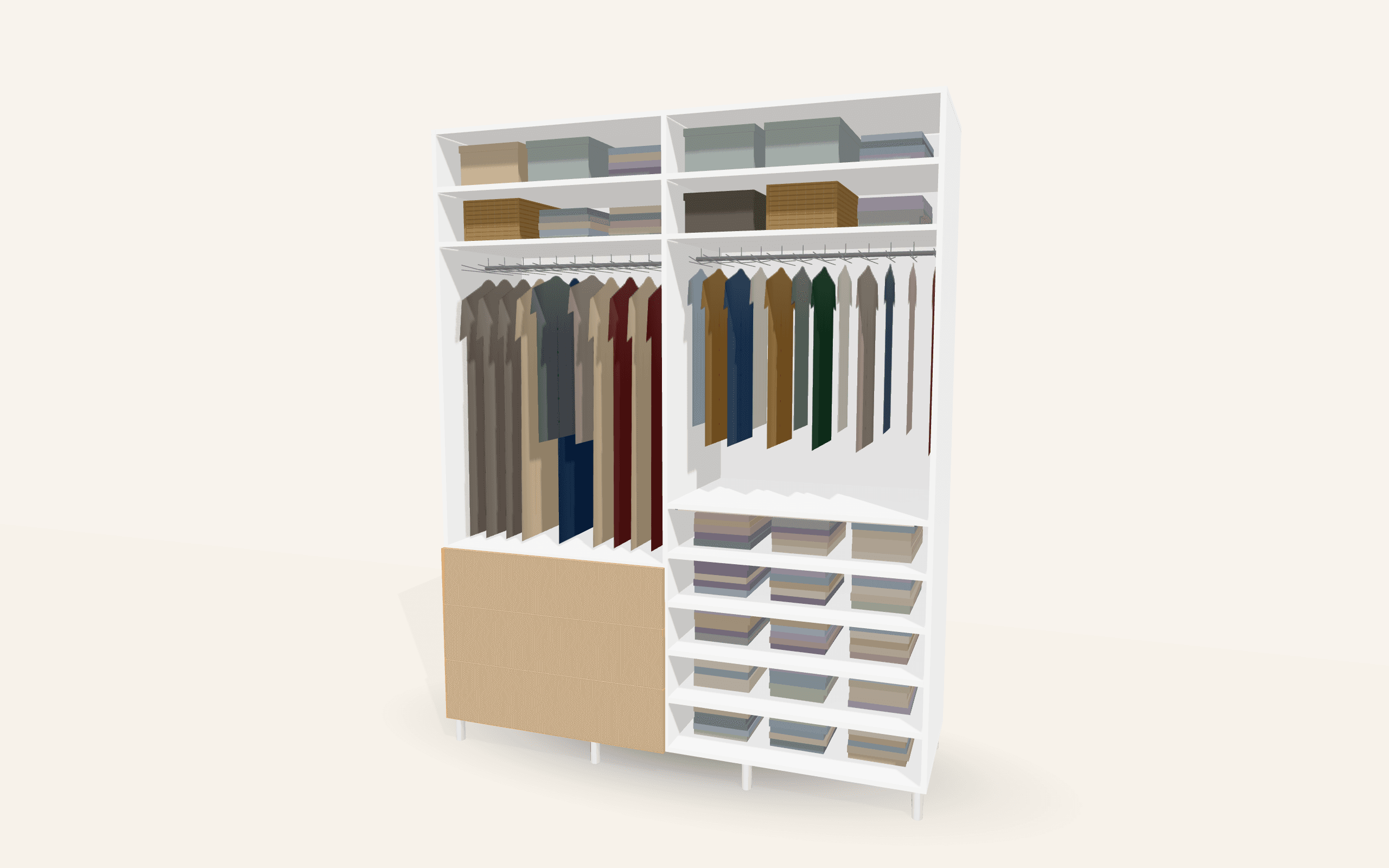
- The body: the carcass and everything inside it, including shelves. Many people choose a light decor here so the inside is bright.
- The fronts: doors and drawer fronts. This is what the room sees.
- A contrast decor: an optional third finish for selected panels, such as one band of a sliding door or a set of drawer fronts.
A common combination is a white body, oak fronts and a dark contrast band. Another is a painted front over a grey body.
How finishes affect the price
Woodgrain and plain melamine decors are usually the most economical. Painted fronts, glass and mirror cost more per square metre. The configurator shows the price as you change each slot, so you can compare combinations directly.
Frequently asked
- Is melamine-faced board durable?
- Yes. The surface is hard-wearing and easy to clean, which is why it is used for most fitted furniture.
- Can I choose any paint colour?
- For painted fronts, almost any. Bring us a colour reference and we match it.
- Can the inside be a different colour from the doors?
- Yes. The body and the fronts are chosen separately, and you can add a third contrast decor.
- Is satin glass see-through?
- No. It lets light through but blurs what is behind it.