Choosing wardrobe hardware: hinges, runners, drawers and lights
The parts you touch every day decide how a wardrobe feels after ten years. A plain guide to hinges, drawer runners, drawer boxes, push-to-open, pull-out and pull-down hanging rails, and lighting.
The boards are what you see. The hardware is what you use: every door opened and every drawer pulled. This guide explains the choices we offer and what each one costs you in money and in day-to-day use.
Hinges
Every hinged door hangs on concealed hinges, hidden inside the wardrobe when the door is shut. Taller doors get more hinges so they stay true.
- Standard concealed hinges close the door firmly and are fine for most wardrobes.
- Soft-close hinges have a small damper that catches the door in the last few centimetres and closes it quietly. Worth it in a bedroom where someone may still be asleep.
Drawer runners
Drawers run on concealed runners fitted underneath the drawer, so you do not see metal on the sides.
- Full extension means the drawer comes all the way out and you can reach the back.
- Soft-close runners pull the drawer shut gently for the last stretch. Every drawer has its own pair, so on a wardrobe with eight drawers the choice is multiplied by eight.
Wooden or metal-sided drawer boxes
There are two ways to build the drawer itself:
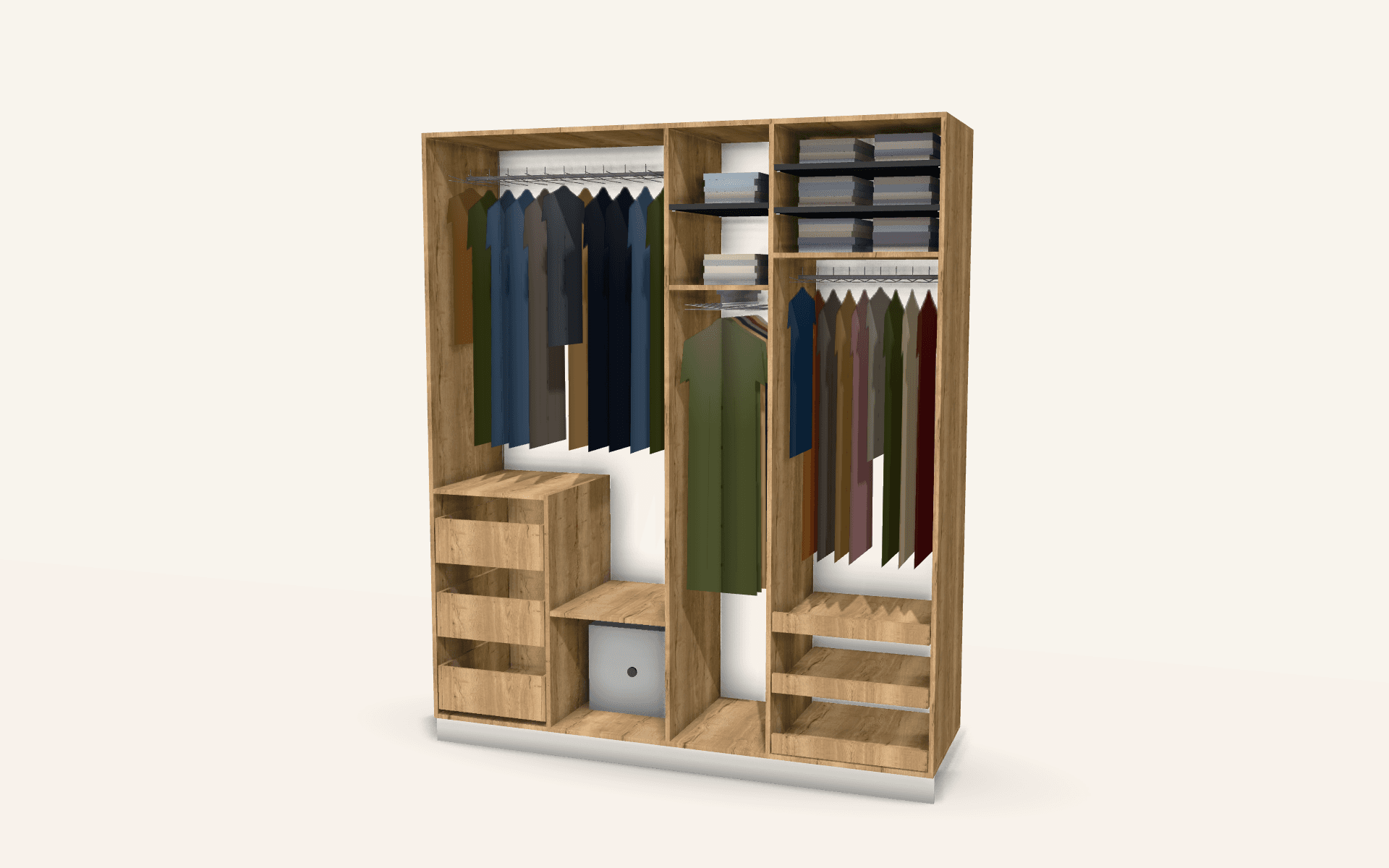
- Wooden boxes: four board sides and a thin base, on concealed runners. Traditional, sturdy and easy to make in any size.
- Metal-sided boxes: thin steel sides with a wooden base and back, sold as a complete system (LEGRABOX-style boxes are one example of the type). Slimmer sides give a little more space inside, and they look neat when the drawer is open.
Metal-sided boxes usually cost more per drawer. On a large wardrobe the saving in board can narrow the gap, so it is worth pricing both.
Push-to-open
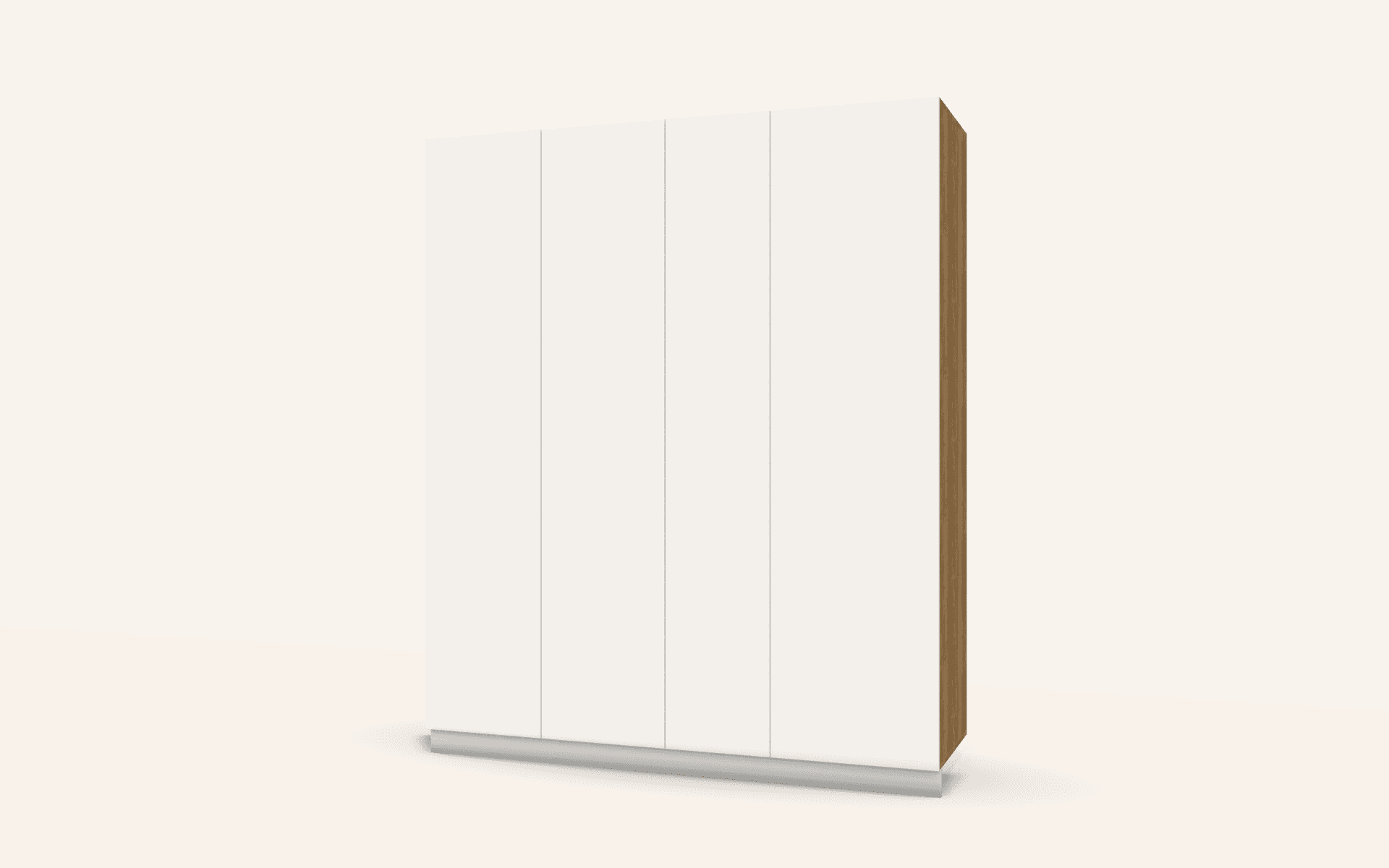
For a flat, handleless front you can fit a small push-to-open latch: press the door or drawer and it springs open.
It looks clean, but think about who uses the wardrobe. Children, and pets brushing past, will open handleless fronts by accident. A slim recessed grip is often the better compromise. Our guide on soft-close and push-to-open goes into more detail.
Hanging rails: fixed, pull-out and pull-down
- A fixed rail runs side to side. Simple, strong, and right for most sections.
- A pull-out rail runs front to back and slides out like a drawer. It suits a shallow or narrow section where a side-to-side rail would not fit hangers.
- A pull-down lift brings a high rail down to you with a handle. Useful in a tall room where the top hanging space would otherwise be out of reach. It needs a section of the right width and enough height to fold down into.
Lighting
LED strips along the top of a section or under a shelf make a deep wardrobe much easier to use, especially in a dim room. They can switch on when the door opens. Lighting needs a power supply nearby, which we check when we measure.
Where to spend and where to save
- Soft-close on the doors and drawers you use daily is money well spent.
- Drawer count affects the price more than most people expect, because each drawer is a box plus a pair of runners.
- Lifts and pull-out rails are worth it only where they solve a real reach or depth problem.
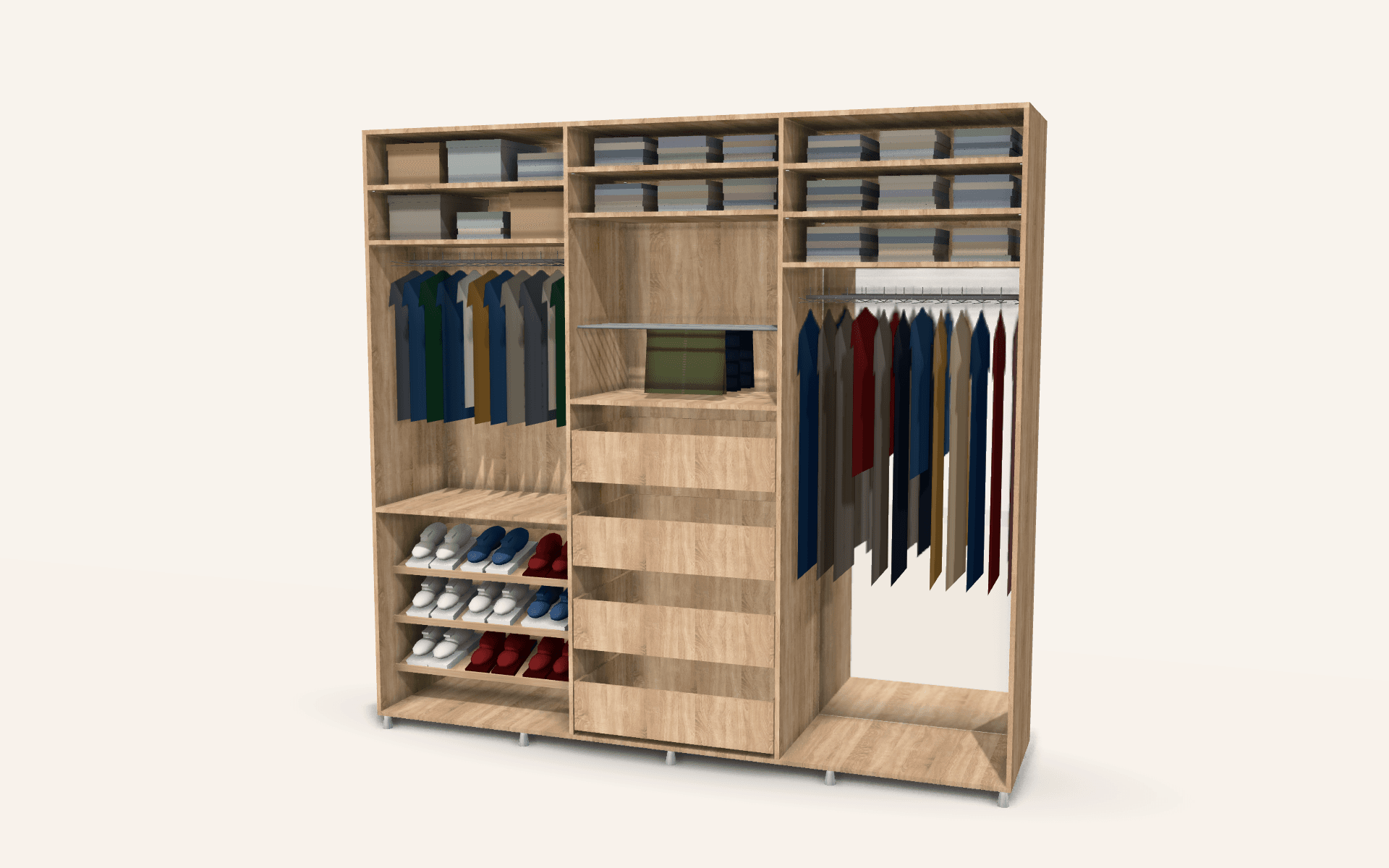
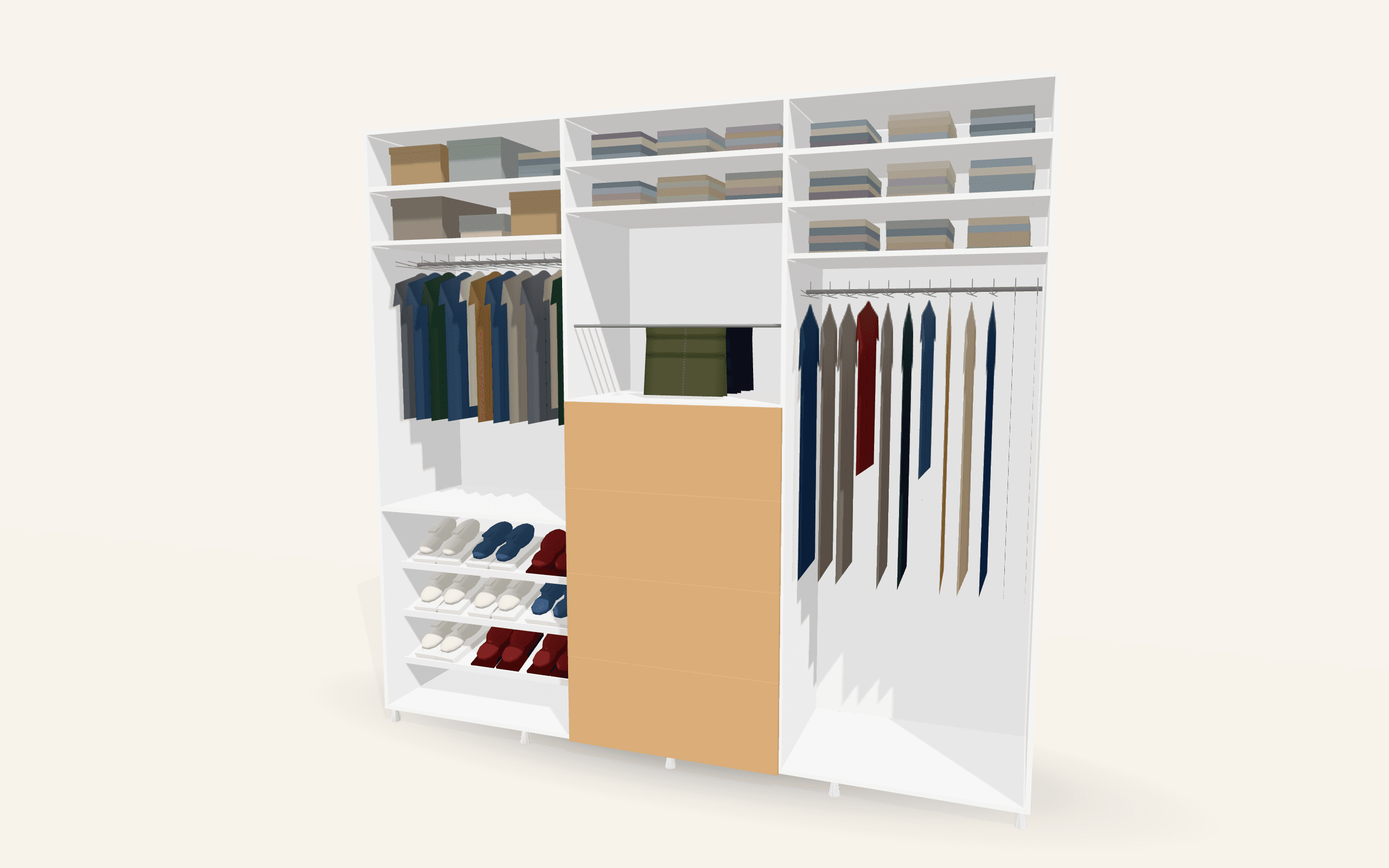
The Holborn handleless and Kensington walk-in designs are good places to try these options and watch the price change.
Frequently asked
- Is soft-close worth paying for?
- For doors and drawers you use every day, most people think so. It stops slamming and reduces wear on the fronts.
- Can I mix wooden and metal-sided drawers in one wardrobe?
- Each drawer bank uses one system, but different banks in the same wardrobe can use different ones.
- Do I need a pull-down lift?
- Only if a hanging rail sits above comfortable reach, usually in a room over about 2.6 m high. Otherwise a fixed rail is simpler.
- Can wardrobe lights run off a plug?
- Often, yes, if there is a socket close by. We check the options when we measure.